Understanding
the Therapy Frame

.
THE INVISIBLE STRUCTURE THAT
MAKES THERAPY POSSIBLE.
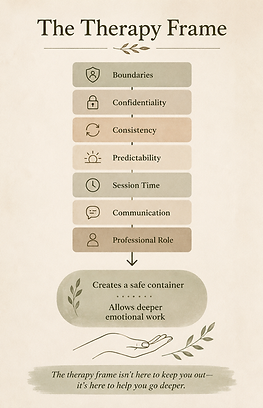
When I first started therapy, I had no idea what the therapy frame was. The ideas that make up the frame. Things like boundaries, consistency, confidentiality, session times, and fees, were all listed in the informed consent paperwork I signed before my first session. They were presented as separate policies rather than parts of something larger. No one explained that together they formed the structure that makes therapy possible. Because of that, I never understood why those pieces mattered. Combined with my own disorganized attachment and a nervous system that had never experienced the kind of consistent care therapy can offer, I found myself navigating the relationship without understanding the very thing that was holding it together. It wasn't until that frame broke and the therapeutic relationship came to an unexpected end that I began to understand why it exists in the first place. Looking back, I can see that the frame isn't there to create distance between therapist and client. It's what allows enough safety, consistency, and trust for the work to happen. Of course, the therapy frame isn't the whole story. Relationships are far more nuanced than that, and there are many other factors that shape what happens in therapy. I'll explore some of those in other resources. But understanding the frame gave me a way to make sense of an experience that had once felt confusing and impossible to put into words.
The therapy frame doesn't prevent attachment, anger, grief, or longing. It creates enough safety for those experiences to emerge and enough structure to work through them together.
What is the therapy frame?
My Experience with the Therapy Frame
The therapy frame is the structure that holds the therapeutic relationship. It's the collection of agreements, boundaries, and expectations that creates a safe and consistent space where you can begin to explore difficult experiences, emotions, and patterns without the relationship itself becoming confusing or unpredictable.
More than anything, I hope this page helps you understand why the therapy frame exists and why it matters. I also hope it helps normalize the wide range of feelings you may have about the frame itself and the boundaries that come with it. They will often press on old wounds. They may bring up grief, anger, fear, longing, or even resentment. Those feelings aren't a sign that something is wrong. They're often part of the work.
When I started therapy, I didn't realize what I was stepping into, and I didn't realize what I was carrying with me. Before I knew it, I was feeling the pain of the professional boundaries and, without realizing it, wishing they could soften so I could feel less ambiguity around the care I was receiving. It was hard for me to believe my therapist genuinely cared about me because, in the context of a professional relationship, I kept thinking, She's just doing her job.
Then there was the thought of losing her.
The thought that therapy would end one day occupied so much of my mind that I struggled to stay present enough to experience what was actually happening. Looking back, I can see how my transference and what I understand to have been my therapist's countertransference began shaping the way we related to one another. Over time, the relationship became more emotionally involved than either of us could safely hold, and eventually the therapy frame broke down. My therapist ultimately had to end our work together because the relationship had become too confusing and was causing more harm than good for both of us.
For a long time, I believed that if I meant enough to her, I wouldn't be left. I thought maybe we could stay in contact after therapy ended. What I understand now is that one of the greatest expressions of care a therapist can offer is maintaining the therapy frame. It isn't distance for the sake of distance. It's what allows you to bring your deepest fears, wishes, and attachment wounds into the room and explore them without everything around you beginning to unravel.
I also think I wasn't at a place in my own healing where my nervous system could fully receive the nurturance she was able to offer. It was simply more than my system could tolerate.
So if the therapy frame hurts sometimes... if you find yourself wishing the boundaries were different, or wondering why they have to exist at all, you're not alone. Those feelings don't mean you're doing therapy wrong. They may be pointing directly toward the places that need the most care. If you can bring those feelings into the therapy room, they may become some of the most meaningful work you ever do.
Concepts Worth Exploring
-
Professional boundaries
-
The therapeutic relationship
-
The therapeutic alliance
-
Transference
-
Countertransference
-
Attachment in therapy
-
Rupture and Repair
-
Containment (the therapeutic container)
-
Consistency and predictability
-
Termination
-
Ethics in psychotherapy
All of these terms are intended to explore in the context of therapy.
The therapy frame isn't just one concept, it's supported by many ideas that work together. If this page resonates with you, these are some topics worth exploring.